
Hydraulic Tipper Operating & Safety Guide
Please take time to review our operating and maintenance instructions. These have been designed for your safety and to get the most out of your new trailer
Titan Hydraulic tipping trailers are designed and built for efficiently unloading bulk materials such as sand, gravel, firewood or agricultural products. However, improper use can lead to serious injuries, equipment damage, and downtime. This manual provides safety guidelines to ensure safe operation and maintenance of trailer tipper assemblies
General Safety Precautions Pre-Operation Inspection
- Inspect the hydraulic system for leaks or damage.
- Check tires for proper inflation and wear.
- Ensure the trailer bed is free from debris or materials that could obstruct tipping.
- Verify the locking pins or safety locks are securely engaged.
- Environmental Awareness: Avoid operating on uneven or unstable ground.
- Ensure the tipping area is clear of people and obstructions

Operating Guide
Positioning the Trailer:
- Align the trailer on firm and level ground before tipping.
- Engage the parking brake and use wheel chocks to prevent movement.
Loading the Trailer:
- Distribute the load evenly to avoid imbalances.
- Do not exceed the trailer’s maximum load capacity.
- Ensure the trailer tilt safety locks are disengaged before tipping
- Remove the Tailgate
- Ensure the rear gate is secured correctly by the Spring Latch.
- Use slow and steady hydraulic movements to raise the trailer bed.
- The RAM will lift in 5 Stages to full tilt
- The rate (speed) of the trailer lift will be weight dependent
- Keep a safe distance during tipping operations.
- Lower the trailer bed slowly to avoid sudden jolting
- Engage locking mechanisms once the bed is fully down.
Prohibited Practices
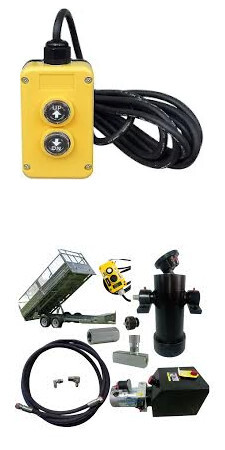
Maintenance Guide
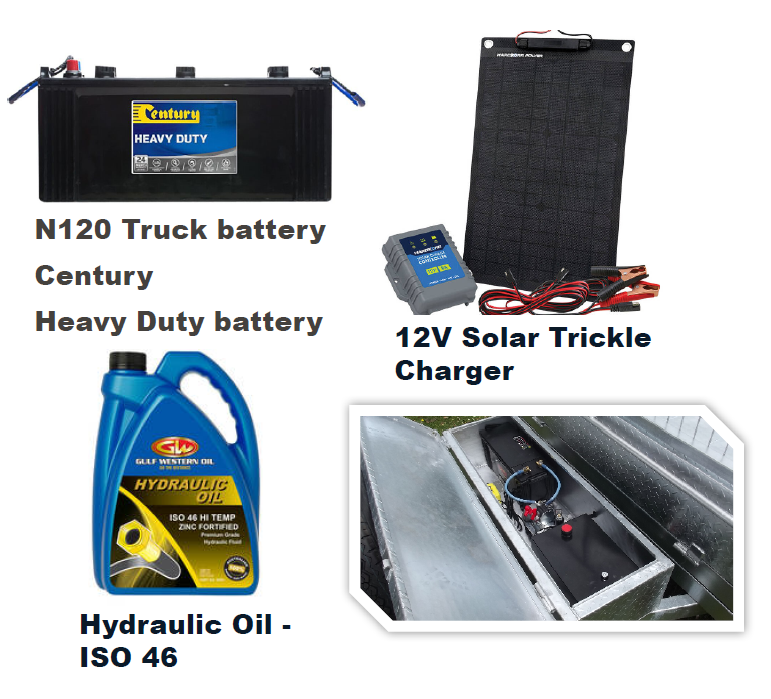
- At full battery charge you will get approx. 10 lifts out of the ram
- The Battery on the Hydraulic Tipper will need to be charged on a fortnightly basis or more frequently if being used regularly
- To prolong the life of the battery do not let it run down completely; this will effect the charging rate of the battery and may result in the battery needing replacing•
- We strongly recommend fitting a 12V Solar Trickle Charger to the tool box and fitting this to the battery.
- Check the Inspect hydraulic hoses and cylinders for leaks or cracks
- Check Hydraulic Fluid levels and top up with ISO 46 (brand not defined). Do NOT overfill the tank as this will cause leaks and fluid to settle in the bottom of the tool box. You will find a dip stick in the tank to check fluid levels
- Verify the proper functioning of the control valves and safety locks.
- Lubricate all moving parts to reduce wear and tear.
- Check structural components, such as the frame and hinges, for signs of corrosion or fatigue.
- Storage: Store the trailer in a dry and secure area. Ensure the hydraulic system is depressurised during long-term storage.
Hazards & Safety
The key to operating your Trailer safely and avoiding Hazards are :
- Avoid Overloading
- Avoid Improper weight distribution; both side to side and front to back
- NEVER get under a raised body without first securing the safety bar
- NEVER Modifying or altering hydraulic components
- Always ensure the trailer is on a solid /level surface before tipping
- Remove Tailgate before tipping and secure rear cage to side of trailer
- NEVER Jerk the hydraulics ram to loosen the load
- NEVER tip the trailer unless the trailer connected to the tow vehicle
- Raising the body while either the tow vehicle and/or trailer are on a soft or uneven surface may result in the tow vehicle and trailer overturning.
- Be aware of surrounds and look for potential hazards from the raised body

Posted: Saturday 30 August 2025